01
c. 3500 BCE
Enki / Ea
Sumer, Akkad
God of fresh water and wisdom who defies the council of gods to warn humanity of the coming flood. The original whisperer.
Volume I
A comparative archive. Read carefully — patterns repeat, and the curious mind will notice what the casual eye does not.
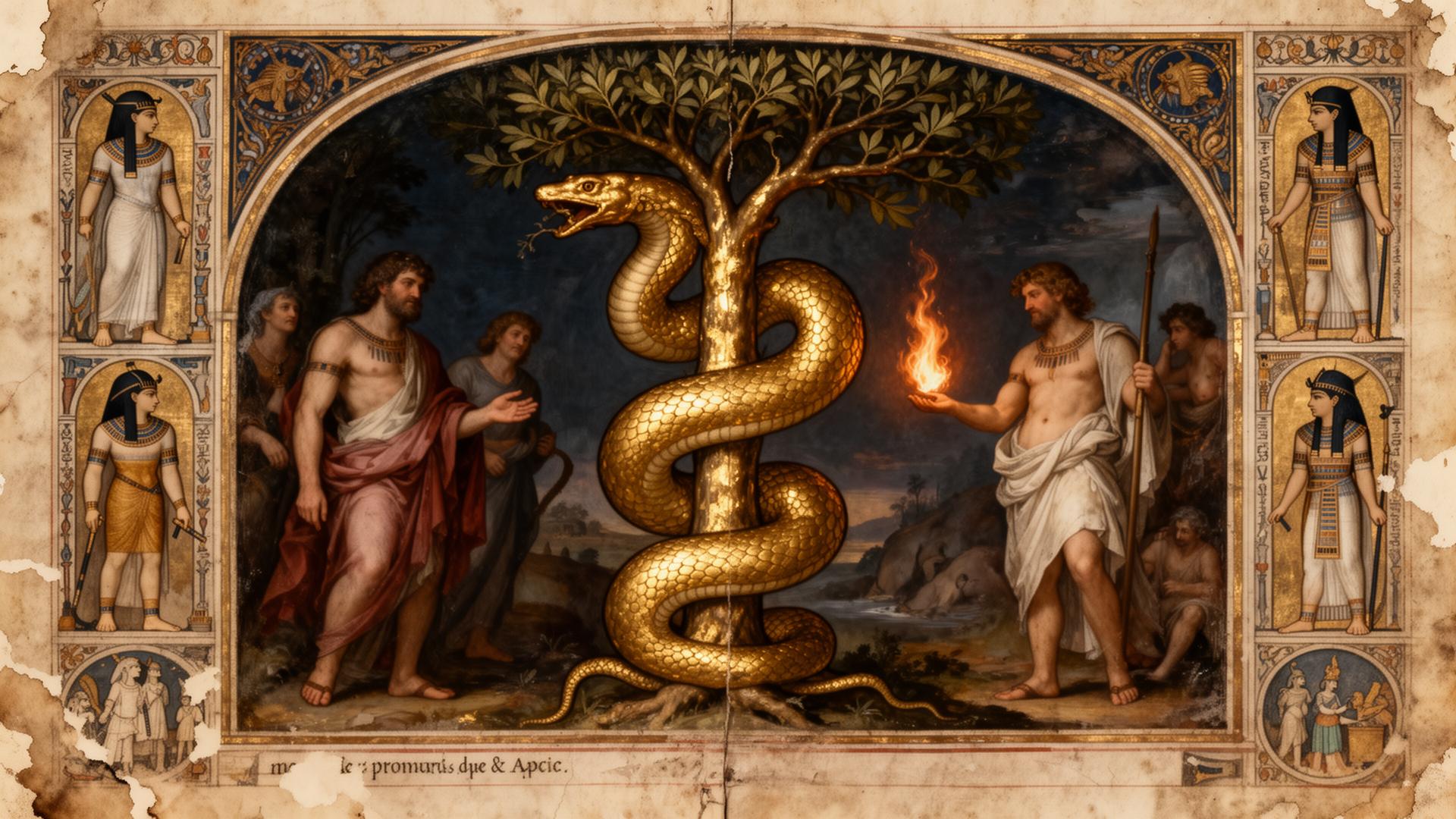
Across five thousand years of human storytelling, one figure recurs with uncanny consistency: the outsider who brings forbidden knowledge — fire, water, wisdom, refusal — to a humanity the higher powers preferred to keep small. Sumerian Enki. Greek Prometheus. Egyptian Set. Persian Ahriman. Hebrew ha-Satan. Quranic Iblis. Milton's Lucifer.
What does it mean that every civilization, independently, invented this same character? That is the question this volume invites you to sit with. We make no conclusion. We merely lay the figures side by side and let the pattern speak.
God of fresh water and wisdom who defies the council of gods to warn humanity of the coming flood. The original whisperer.
Lord of the desert, storms, and disorder. Slayer of Osiris — yet also defender of Ra's solar barque against the serpent of chaos.
The dualistic adversary to Ahura Mazda. With Ahriman, Western religion first formalizes the cosmic opposition of light and shadow.
Not yet a fallen angel — a courtroom prosecutor in Job, walking the earth and reporting back. The accuser, not the enemy.
Titan who steals fire from the gods to give to mankind. Punished eternally, yet remembered as humanity's first benefactor.
The jinn who refused to bow to Adam, claiming devotion to God alone. A theology of disobedience as fidelity.
Three-faced, frozen at the center of hell, weeping. The medieval imagination crystallizes the figure of pride.
'Better to reign in Hell than serve in Heaven.' English literature's most charismatic antagonist — and accidental anti-hero.
Not a being but a metaphor for self-determination, reason, and the rejection of imposed shame.
"Every age makes the Adversary in the shape of what it most fears to question."
— from the marginalia of the Temple Codex
The library is free. The labor was not.
CashApp $matthewsmith9999